

Wolfsbane
Newcastle Studios
Wolfsbane is a Unity-based tactical role-playing game currently in development by Newcastle Studios, of which I worked on its prototype from Jun ’25 – Dec ’25.
I was the Lead Systems & Level Designer of a 5-person team via contract, being responsible for the unit design, combat design, level design, economy design, part of the UI design, all of the visual components, and some implementation work.
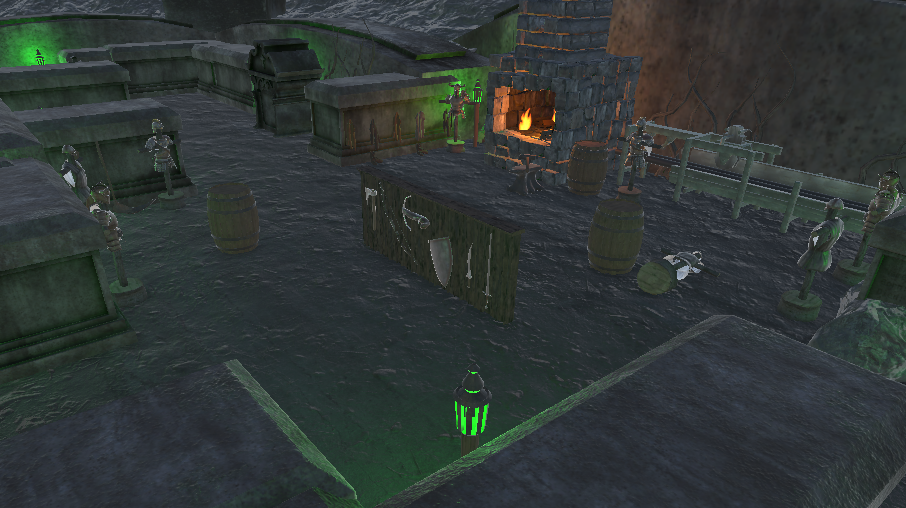
Wolfsbane’s Catacombs Level
Overview
What made Wolfsbane unique is its necromancy gimmick, where you can revive enemy units to create a massive army to mow down your enemies. As such, this required a lot of design accomidation, but I achieved this via things like unit compression, having specific army compositions in mind when it comes to levels, simplifying how the army works, and an emphasis on balancing AOE attacks. Additionally, what made Newcastle unique is that it’s funded entirely by just one wealthy guy that wanted specific aspects he wanted the game systems to include, which the team needed to build around in order to both make engaging gameplay and keep our funder happy.
Game Systems
With Wolfsbane, a lot of its major system work came in the form of the aforementioned combat and economy. My favorite system is actually a relatively simple one: the Necrosis mechanic. All Necrosis does is that every time a generic army unit attacks, whoever they attack takes +1 stacking damage for the rest of the turn. That way, army units can be powerful in large numbers, no matter how weak they are compared to an enemy unit.
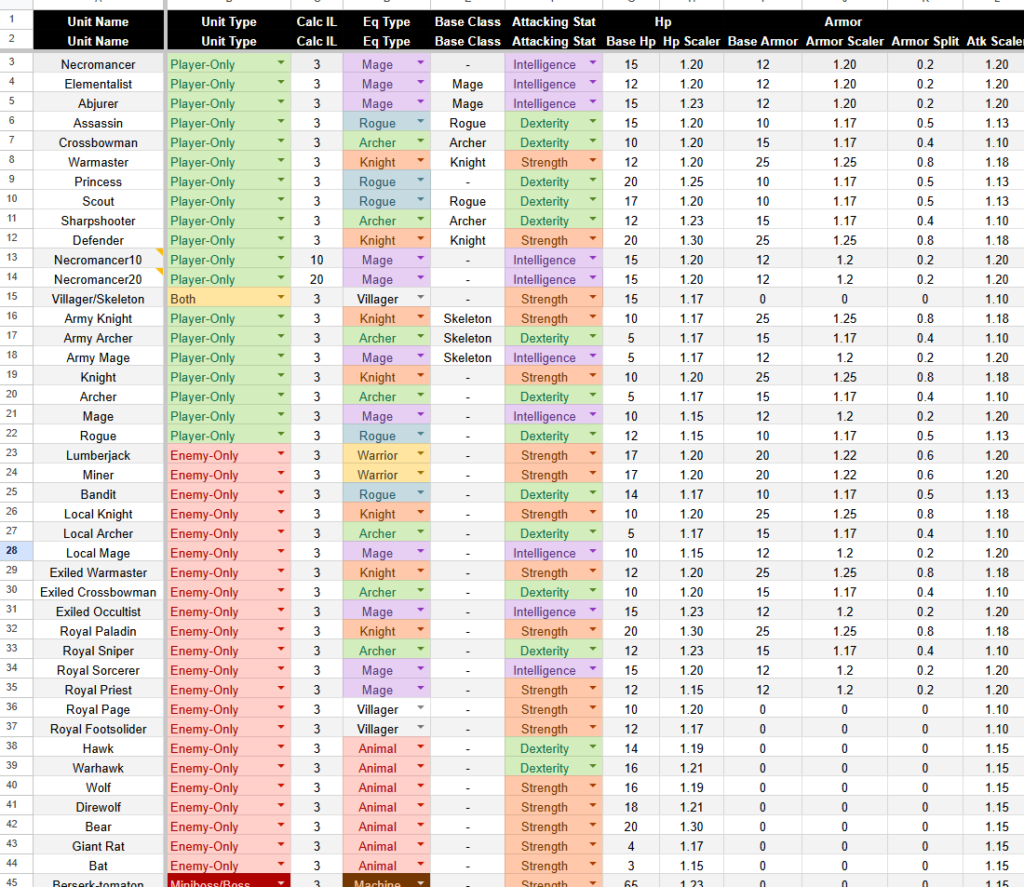
And of course, any good systems design comes with a good spreadsheet. There are about a dozen custom functions in it, all of which let the damage calculator section of the spreadsheet function almost independantly, so long as the unit & ability data is in its respective section of the sheet. Both units and the resource economies were really easy to balance with this thing!
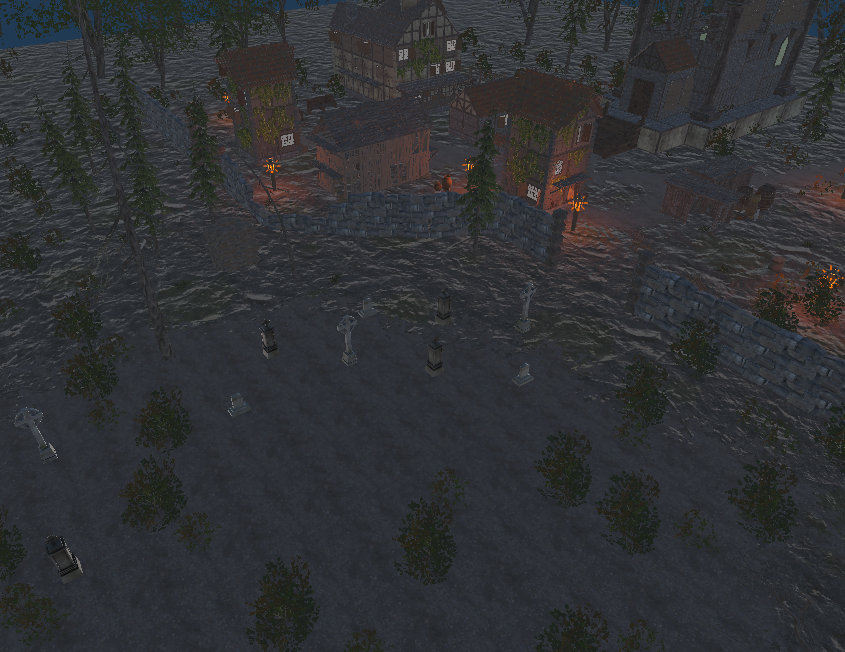
The first level I made for Wolfsbane, Village-1
Levels
I was actually hired onto Newcastle primarily for my ability to do both design and implementation work on levels, as they wanted to keep the dev team small during its prototyping phase. The first level I made was actually a trial of sorts for the existing Newcastle members to evaluate how much of a fit I would be for the team, how worth it would be to add me, etc. Of course, I continued development with them immidiately after finishing the level.
Afterwards, I continued to do levels for them, including both simpler, reusable levels like that first village level, as well as massive “city”-scale levels, which would serve as the high points of the game.
UI
UI in strategy games is definitely not unimportant; menuing takes up a ton of time when it comes to those sorts of games (or at least it does for me). As such, the menus for Wolfsbane needed to be both complex enough to support a wide variety of unit mechanics, as well as simple enough to be able to navigate those mechanics quickly & communicate them effectively. So, I tried to keep all the information displayed at any given time relagated to mostly popups so that the user isn’t overwhelmed.
I also tried to leave enough room in the UI to add additional mechanics if we needed the space, which, as it turns out, we did. The blank area to the right of the stats table was used later on for an equipment system, which fit in fairly snugly.
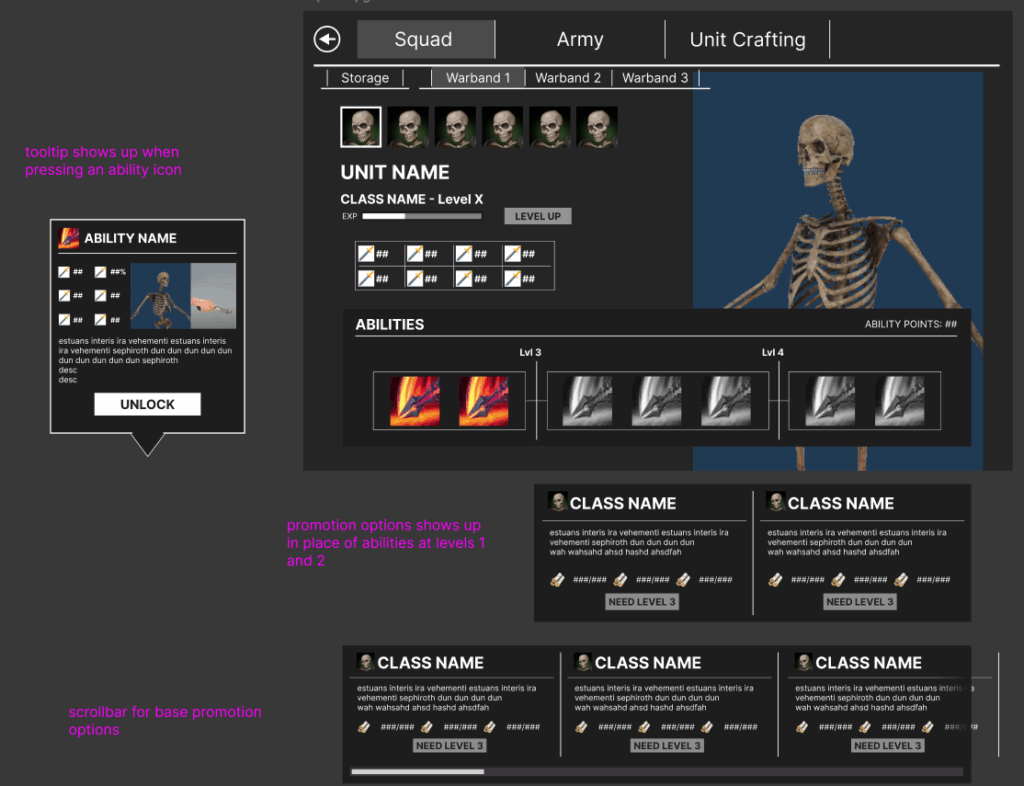
Wolfsbane’s Level-Up Menu